
Realm Idle
AbyARole Playing
4.5347.00 Reviews
- Version
- 4.1.2.3
- Installs
- 100.00K
- Age Rating
- Everyone 10+
Screenshots

Our Review of Realm Idle
 Analysis by Appyee
I spent time with Realm Idle as a free role-playing game built around gradual progress rather than constant attention. Its central appeal is easy to understand: I set my character toward improving skills, crafting equipment, and confronting bosses, then let the game continue making progress while I am away. That makes it a very different experience from a traditional action RPG, where every fight demands quick reactions and every upgrade depends on several minutes of uninterrupted play.
The game comes from AbyA and has already attracted over 100 thousand installs, with a 4.5 average from around 4.5 thousand ratings. Those figures suggest that its quiet, long-term style has found an audience, but they do not tell the whole story. The important question is whether you enjoy managing a growing character more than actively controlling one. In my experience, that distinction decides almost everything about whether this game feels satisfying or slow.
How Realm Idle turns small decisions into long-term progress
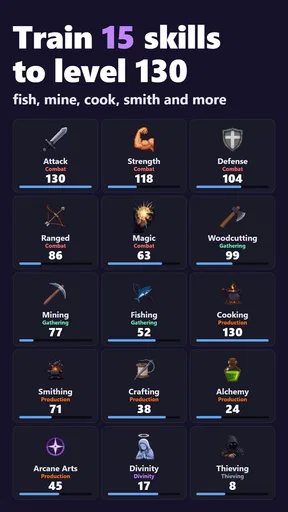
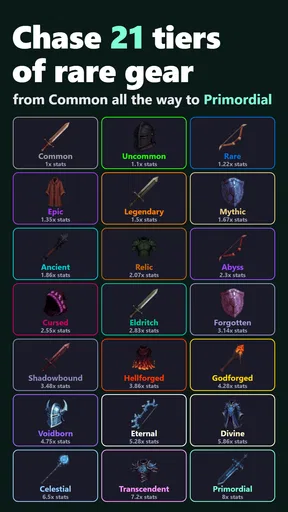
The structure is based on training across 15 skills, collecting or producing better equipment, and preparing for boss encounters. I found the skill-focused design more interesting than a simple “tap to get stronger” loop because it gives progress several directions. When one activity starts feeling repetitive, I can shift attention toward another part of the character’s development instead of waiting for a single upgrade path to finish.
That variety also creates a useful planning problem. Improving a skill may help with future crafting, while better gear can make difficult fights more manageable. The most effective approach is not to treat every activity as equally urgent. I prefer to identify the next meaningful obstacle, then spend time on the skills and equipment that support it. This makes the game feel less like a passive timer and more like a small personal project that happens to continue while I am offline.
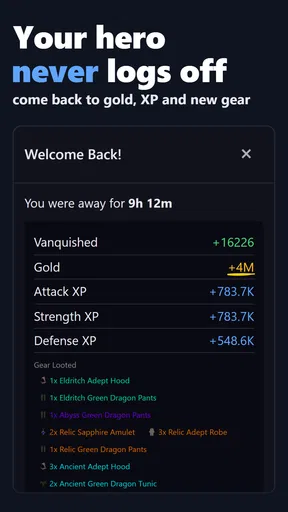
The offline progress is the feature that gives the whole design its identity. I can close the game before commuting, working, or sleeping and return later to collect the results of the activity I selected. That is convenient, but it also changes the rhythm of play. There is no need to remain in the game simply to maintain momentum, so the best sessions are often short check-ins followed by a deliberate choice about what should happen next.
A realistic everyday use case is a busy weekday. I might open the game during breakfast, choose a skill that supports the next equipment goal, and leave it running in the background of my routine without needing to watch it. During a lunch break, I can review the outcome, adjust the plan, and start another stretch of progress. This works particularly well for people who want an RPG habit without committing to a long evening session.
Free access and what the purchase model means
Realm Idle is free to download and play, so the initial decision is low risk. I can explore the basic loop without paying an entry fee, which is important for an idle RPG because the format is not enjoyable for everyone. Some players will immediately like the slow accumulation of progress; others will find the waiting and repeated preparation too passive. Free access lets that preference become clear before money is involved.
Optional in-app purchases range from $0.99 to $24.99 per item. I would treat those purchases as a convenience or support decision rather than a requirement to understand the game. The free starting point provides the opportunity to judge whether the skill progression, crafting, and boss preparation are worth continuing. Since the purchase amounts vary, I would personally avoid buying anything during the first sessions and first learn which part of the loop actually causes friction for me.
That approach matters because idle games can make impatience feel like a problem that needs to be solved with spending. If a delay is part of the intended pace, paying to shorten it may provide a temporary lift without improving the underlying experience. On the other hand, a player who already enjoys the routine may see a small optional purchase as a reasonable way to make the game more comfortable. The value depends on whether the purchase supports a game I already like, not whether it makes me tolerate one I do not.
The game is rated Everyone 10+, which places it in a broad audience range while still signaling that it is not aimed at very young children. Parents deciding whether it suits a particular child should consider the role-playing and boss-fighting context alongside the presence of optional purchases. For adults, the more relevant concern is usually time management: the game is designed to invite frequent returns, even though it does not require continuous play.
Where the progression feels useful instead of empty
The strongest value comes from having several kinds of progress connected to one another. Skill development is not merely a number that rises in isolation; it feeds into the wider loop of making gear and becoming ready for stronger opponents. That relationship gives ordinary preparation a purpose. I am not improving a character just to watch a larger value appear. I am building toward a practical goal, such as being better equipped for a boss attempt.
I also like the way offline progress can turn small pockets of attention into a complete routine. A few minutes spent choosing the next activity can matter even when I have no time for a full play session. This is a better fit for someone who checks a phone between responsibilities than for someone who wants a dramatic story scene or a long tactical battle every time they open an RPG.
One non-obvious benefit is that the game encourages planning around absence. In many RPGs, closing the app means stopping completely. Here, leaving at the right moment is part of the strategy. Before going offline, I can select a task that matches my next objective rather than simply choosing whatever gives the largest immediate reward. That makes preparation before a busy period surprisingly important.
A second useful insight is to avoid treating all 15 skills as a checklist that must be advanced evenly. A broad skill system can tempt me to spread effort everywhere, but that may delay the equipment or combat milestone I actually care about. I get more value by choosing a primary direction, using related skills to support it, and only widening the plan when a clear reason appears. This reduces the feeling of grinding without a destination.
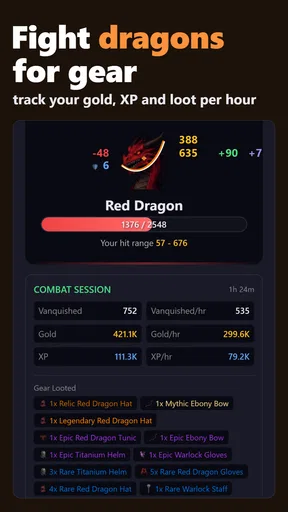
A third trade-off appears when crafting and boss preparation compete for attention. It can be tempting to keep producing equipment because crafting gives visible progress, but a stockpile is not automatically useful if it does not solve the next combat problem. Conversely, rushing toward a boss without enough preparation can make the encounter feel like a wall. I found the best rhythm came from alternating between production and testing rather than committing permanently to one side.
What it feels like beside more active RPGs
Compared with a conventional action RPG, Realm Idle asks for far less direct control. There is no need to spend every battle dodging, aiming, or memorizing attack patterns in the way many active games require. That makes it accessible during short breaks and less demanding when I am tired. The trade-off is obvious: players who want responsive combat and a strong sense of moment-to-moment agency may find the experience too subdued.
It also differs from story-driven role-playing games. A story RPG usually gives me characters, dialogue, locations, and set pieces that pull me through a narrative. This game’s motivation comes more from improving a personal progression system and preparing for the next challenge. If I play mainly to discover a world or follow a plot, a traditional narrative title is likely to deliver more value. If I enjoy optimizing a routine and watching a character grow over time, this structure is more suitable.
Against other idle games, the combination of skills, crafting, and bosses gives the loop more texture than a single upgrade button. The game still depends on patience, but I have more decisions to make about where that patience should be invested. That is its main advantage within the idle category. The limitation is that additional systems can also create more management, so someone seeking an extremely simple background game may prefer a more minimal alternative.
The offline design is especially valuable for players who dislike games that punish them for not checking in constantly. I can use it as a low-pressure companion rather than a second job. Still, the same feature can reduce urgency. When progress continues without me, returning immediately is not always necessary, and some sessions may feel like collecting results and selecting another task rather than actively playing.
Practical habits that make the loop more satisfying
I recommend beginning with a clear short-term target instead of trying to master the entire system at once. For example, I might decide that my next goal is to improve equipment for a boss attempt. That gives every skill decision a filter: does this help me craft, strengthen, or prepare for that goal? Once the target is reached, I can reassess rather than continuing on autopilot.
Before closing the game, I would also check whether the selected activity matches the length of the break ahead. A short absence is a good time to choose a quick step toward a near-term upgrade, while a longer absence can be used for a broader skill objective. This habit makes offline progress feel intentional. It also prevents the common idle-game problem of returning to a pile of rewards without knowing what to do next.
For crafting, I would resist producing gear simply because the option is available. The better question is whether the item improves the next part of the plan. This keeps resources and attention focused, and it makes each crafted upgrade feel connected to the character rather than decorative. The same principle applies to boss fights: use them as checkpoints for preparation, not as attempts made only because they are visible.
I would keep purchases out of the early learning period. Because the game is free, there is no need to decide immediately whether optional items are worth their listed prices. First, I would see whether the basic progression feels rewarding during ordinary days, whether offline returns fit my schedule, and whether the boss-and-crafting loop remains interesting after the initial novelty fades. If those answers are positive, spending becomes a personal value choice instead of a guess.
The current version is 4.1.2.3 and it supports devices running Android 7.0 or later. That makes it relevant to people using older Android hardware, assuming the device meets that system requirement. I would still judge the experience on the actual phone being used, especially if the player plans to leave the game available during a busy day. The important practical point is that the game is positioned as an accessible, low-attention RPG rather than a demanding showcase built around constant active control.
Who should play, and who should leave it alone
I think the best audience is someone who enjoys gradual improvement, light planning, and the satisfaction of returning to completed work. It suits players who like crafting decisions, skill specialization, and boss milestones but do not always have time for a full RPG session. It is also a good match for people who want their progress to continue during commutes, workdays, or overnight periods without having to keep the screen in front of them.
It is less suitable for anyone who needs immediate action to stay engaged. If your favorite part of role-playing games is controlling every attack, exploring a large environment, or following a detailed story, the quiet progression may feel thin. Players who dislike waiting, repeated skill training, or checking several connected systems should also be cautious. The free price removes the financial barrier, but it cannot remove a mismatch between the game’s pace and your preferences.
I would also skip it if I tend to spend impulsively when progress slows. Optional purchases can be reasonable when they add convenience to a game I already enjoy, but they are not a substitute for enjoying the underlying loop. The healthiest way to approach this title is to regard payment as optional support for a satisfying routine, not as the entrance ticket to the interesting part.
For a family deciding whether to share the game, the Everyone 10+ rating and optional purchase range deserve a quick conversation before play begins. The game’s role-playing and boss structure may be perfectly comfortable for one younger player and less appealing to another. The rating is useful context, but personal maturity and spending habits still matter more than the label alone.
My final recommendation
After using it as an everyday check-in RPG, I see Realm Idle as a focused choice rather than a universal recommendation. Its best idea is the connection between long-term skill growth, crafted equipment, and boss preparation, all supported by progress that continues while I am away. That combination gives short sessions a purpose and makes the game easy to fit around real responsibilities.
The cost is straightforward: the game is free to start, while optional items sit between $0.99 and $24.99 each. I would not judge its value by how quickly a purchase accelerates progress. I would judge it by whether the free routine already gives me a reason to return. If it does, optional spending can be considered carefully. If it does not, paying more will probably only make the same basic loop move faster.
My recommendation is positive for patient players who enjoy building toward milestones and making small decisions over time. I especially recommend trying the offline routine during a normal week rather than only during a long first session. That reveals its real strength: it turns scattered attention into steady progression. For players seeking active combat, rich storytelling, or immediate excitement, another role-playing game will be a better purchase of time even though this one costs nothing to begin.
Realm Idle is worth trying when you want an RPG that respects interruptions and rewards planning. Go in expecting a gradual management experience, not a hands-on adventure. With that expectation, its free entry, connected skill-and-crafting loop, and offline progress make it a useful companion game. Without that expectation, the same patience-based design can feel more like waiting than playing.
Verdict
Strengths of Realm Idle
- Relaxed idle gameplay requires little time or active attention.
- Offline progress lets you earn rewards while away from the game.
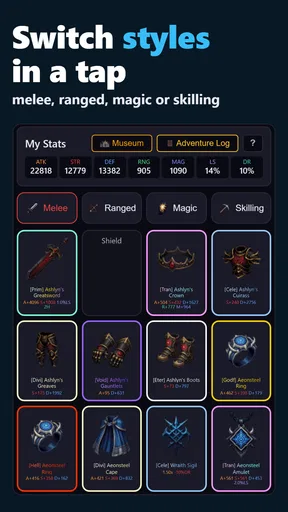
- Hero upgrades and equipment provide steady long-term progression.
- Simple controls make it accessible for casual and new players.
- Short play sessions fit well into daily routines.
Limitations of Realm Idle
- Progress can feel slow without frequent upgrades or resource spending.
- Repeated battles may become monotonous after extended play.
- Limited active control may disappoint players seeking strategic combat.
- Ads or optional purchases may influence the pace of progression.
- Late-game content can require substantial grinding to advance.
Similar Picks in This Category
View All
Hair Dye
CrazyLabs LTD4.4

Monster High™ Beauty Salon
CrazyLabs LTD4.5

Bus Simulator - Bus Games 3D
Jima Apps4.4

Flight Pilot: 3D Simulator
Wildlife Studios4.1


Super Stylist Fashion Makeover
CrazyLabs LTD4.4
Frequently Asked Questions
What is Realm Idle and how does the gameplay work?
Realm Idle is an idle progression game focused on building power over time with limited active input. You typically develop heroes or units, collect resources, improve equipment, unlock new areas, and challenge increasingly difficult enemies. Progress continues while you are away, although regular check-ins are useful for claiming rewards, starting upgrades, managing your team, and making strategic decisions.
Can Realm Idle be played offline?
Realm Idle may allow some progression or basic gameplay without a constant internet connection, but online access is generally important for synchronizing progress, receiving idle rewards, participating in events, viewing advertisements for optional bonuses, and accessing account-related features. Offline availability can vary by version and device, so players should not assume every feature will work without an active connection.
Is Realm Idle free to download and play?
Realm Idle is generally offered as a free download, allowing players to begin progressing without paying upfront. However, free-to-play systems may include optional in-app purchases, premium currency, bundles, or convenience upgrades. These purchases can speed up development or provide extra resources, but they are not necessarily required to enjoy the core idle gameplay if you are comfortable progressing at a slower pace.
Does Realm Idle contain advertisements or in-app purchases?
Players should expect that Realm Idle can use advertisements and optional purchases as part of its monetization model. Advertisements may provide rewards such as additional resources, faster progress, or extra attempts, while purchases may offer premium currency and special packs. Before downloading, check the store listing and your device’s purchase settings, especially if children may access the game.
What should I know about progress, accounts, and device compatibility?
Before starting Realm Idle, make sure your device meets the current Android or iOS requirements and has enough free storage for the application and future updates. If the game supports account linking or cloud synchronization, using that option is recommended to protect progress when changing devices or reinstalling. Guest progress may be harder to recover, so connect an account as soon as the feature becomes available.
Play our best games!


